
Costa Brava
The Wild Coast — rocky coves, medieval villages and a more upmarket, northern European profile. Girona province. Less 'British package' and more French, Belgian and Dutch second-home owners.
Suited to: Affluent second-home owners · Retirees seeking style · Culture and food lovers · Nature and coastal walkers
- Flight from the UK
- 2h 00m–2h 25m
- London Gatwick–Barcelona
- British residents
- 3,372
- Girona province, UK nationals · INE census, 1 Jan 2025
- 2-bed rent
- ~€970/month
- ≈70 m² at €13.9/m² · idealista asking rents, Sep 2026, Girona province
- Main hospital
- Josep Trueta
- Girona, public
- Sunshine
- ~2,330 hrs
- a year · AEMET Girona Aeropuerto, 1981–2010 monthly normals
- Airport
- Girona
- ~30–50 km · Barcelona El Prat ~100–140 km
Updated 5 Jul 2026 · Figures from INE, idealista and AEMET · How we check
Choose
Which town on the Costa Brava?
7 towns we cover, each with its own guide. Start with the one that sounds like you.
Lloret de Mar
The Costa Brava's largest and most famous resort town — high-density tourism, good Barcelona transport links, and a large foreign-resident population that swells dramatically in summer.
Best for Families · Young professionals · Second-home owners
Read the guide →Tossa de Mar
A UNESCO-recognised medieval walled town perched above turquoise coves — quieter, more refined, and pricier than its neighbour Lloret de Mar.
Best for Retirees · Culture and history lovers · Second-home owners
Read the guide →Roses
The Costa Brava's northern gateway — a working fishing port, bay beaches and gateway to Cap de Creus, with more affordable property than the southern Brava.
Best for Families · Retirees · Second-home owners
Read the guide →L'Escala
A working fishing village with sandy beaches, Greek and Roman ruins at Empúries, and a quieter, more authentic Costa Brava character than the big resorts.
Best for Families · History enthusiasts · Retirees
Read the guide →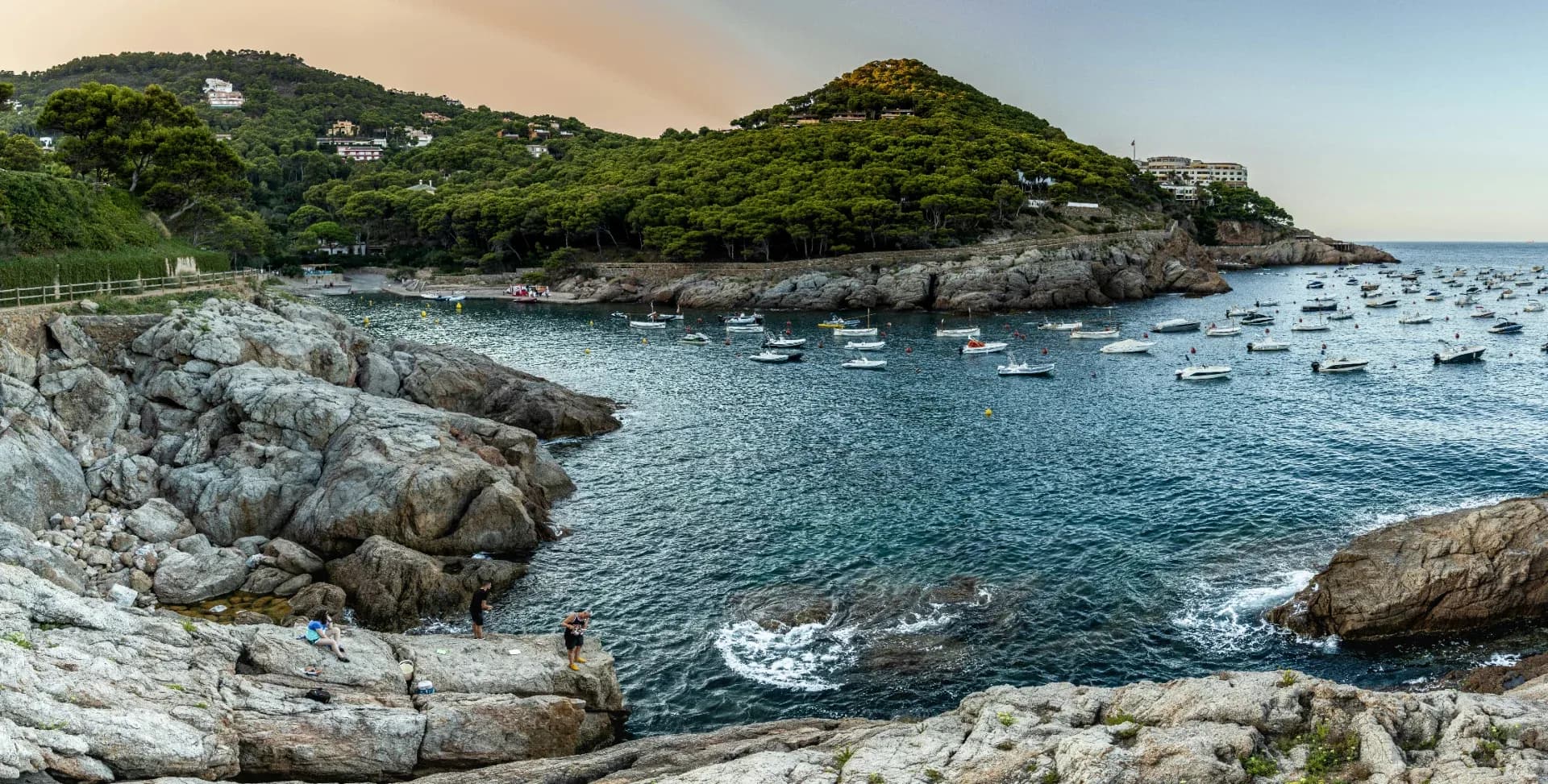
Begur
The "St Tropez of Catalonia" — a hill village with a medieval castle, exclusive coves, and a very premium, very international second-home market.
Best for Affluent second-home owners · Retirees seeking luxury · Culture and food lovers
Read the guide →Pals
A spectacular medieval inland village surrounded by rice fields, near the beach and golf — one of the Costa Brava's most exclusive and expensive addresses.
Best for Affluent second-home owners · Retirees seeking luxury · Golfers
Read the guide →Platja d'Aro
A modern, lively resort with a long sandy beach, strong shopping and leisure infrastructure, and a younger family demographic on the central Costa Brava.
Best for Families · Young professionals · Second-home owners
Read the guide →
Where
The Costa Brava on the map
Every town we cover, plus the airports you'd fly into.
Decide
Which Costa Brava town suits you?
Three quick questions and we'll suggest the towns that fit.
Background
About the Costa Brava
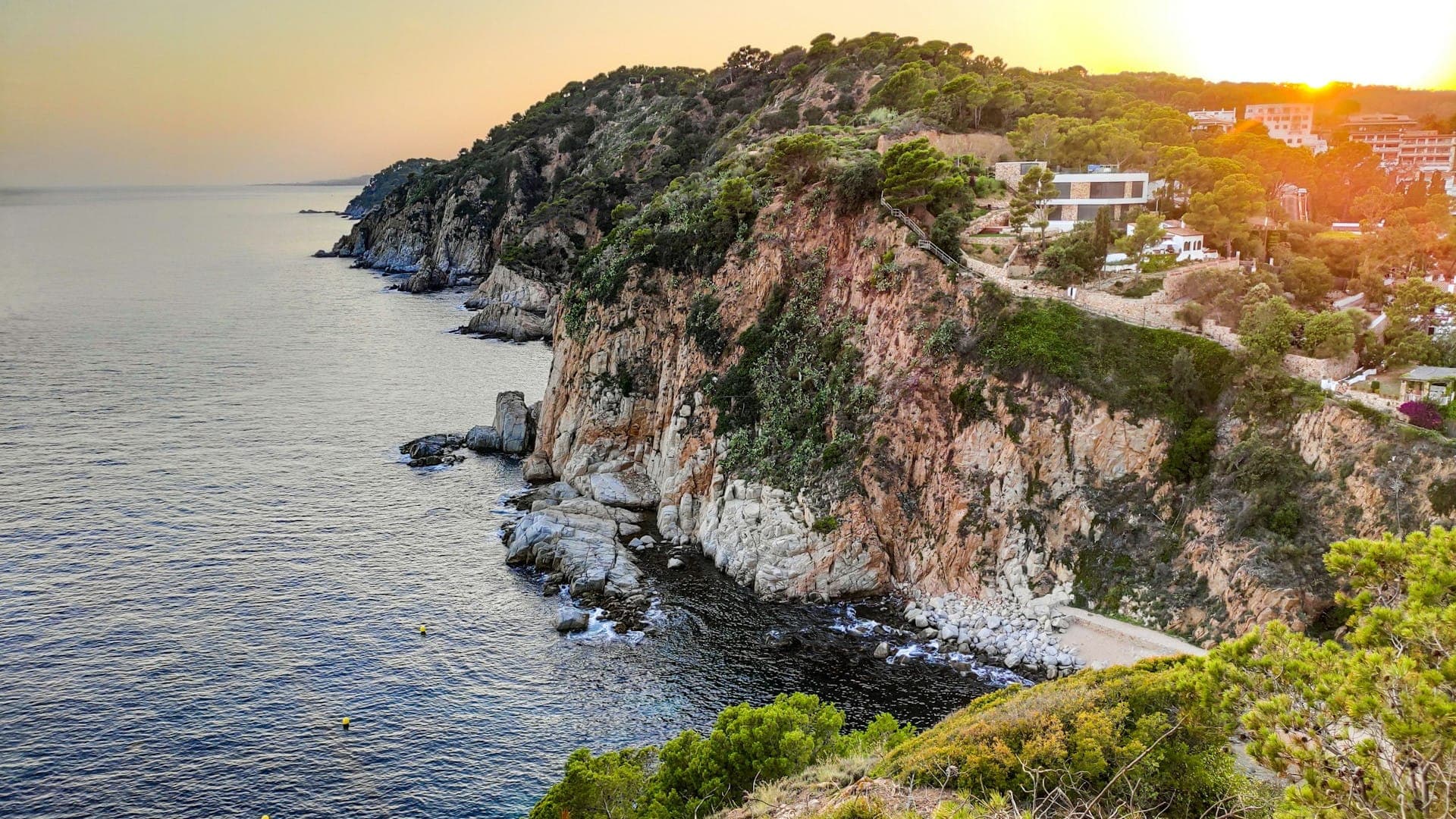
The Costa Brava is, in our view, the prettiest coast we cover and the least British: rocky coves, pine headlands, the Camí de Ronda coastal path, and medieval hill villages such as Begur and Pals a few kilometres inland. Girona, with Josep Trueta public hospital, is the city for services. The foreign buyers here are mostly French, Belgian, Dutch and Swiss; Girona province had 3,372 UK nationals at 1 January 2025 (INE census).
It is not cheap. Asking rents in Girona province were about €13.9/m² in September 2026 (idealista), roughly €970 a month for a 70 m² flat, second only to the Costa del Sol among the coasts we cover. Entry-level flats in Lloret de Mar or Roses start around €150,000, while sea-view villas and village houses in Begur, Pals or Aiguablava can pass €1–2 million.
Practicalities: Girona–Costa Brava airport has mainly seasonal UK flights, so many people fly to Barcelona El Prat, 92–140 km away. The coastal railway from Barcelona stops at Blanes; beyond that you need a car or bus. Roses is about 70 km from Perpignan in France. Winters are cooler and greyer than in the south (Girona averages about 2,330 sunshine hours a year), and many villages close up from November to Easter. Catalan is the everyday language.
It suits affluent second-home owners, walkers, food lovers and people who want northern Europe within driving distance. It does not suit tight budgets or anyone looking for warm winters and an English-speaking social life.
British community: Small to moderate. Costa Brava does not have the mass British tourism of the Costa Blanca or Costa del Sol. The foreign buyer profile is more French, Belgian, Swiss and Dutch. Some British retirees and second-home owners in Lloret, Roses and Playa de Aro.
Practicalities
Renting, buying and paperwork
Renting and buying
Premium by Spanish coastal standards. Entry-level apartments in Lloret or Roses from ~€150,000. Sea-view villas and historic village houses in Begur, Pals or Aiguablava can exceed €1–2 million. The market is heavily second-home driven, with strong French and Belgian buyer activity.
Paperwork
Padrón at local Ajuntament. NIE/TIE via Comisaría in Girona city or Figueres. Healthcare through CatSalut (Catalan public system) after padrón registration. Private hospitals in Girona and Barcelona.
Compare
Other costas
Sources and notes
- Our Costa Brava guidance is based on desk research and official sources.
- Population data from IDESCAT (2024–2025). Girona province has a smaller British population than Alicante or Málaga.
- Property notes are general market signals. The premium segment dominates in Begur, Calella de Palafrugell and Aiguablava.
- Holiday lets need a Catalan tourist licence (HUT, Habitatge d'Ús Turístic).
- Population and community figures come from the latest official sources. They change year to year and do not count unregistered residents or second-home owners.