
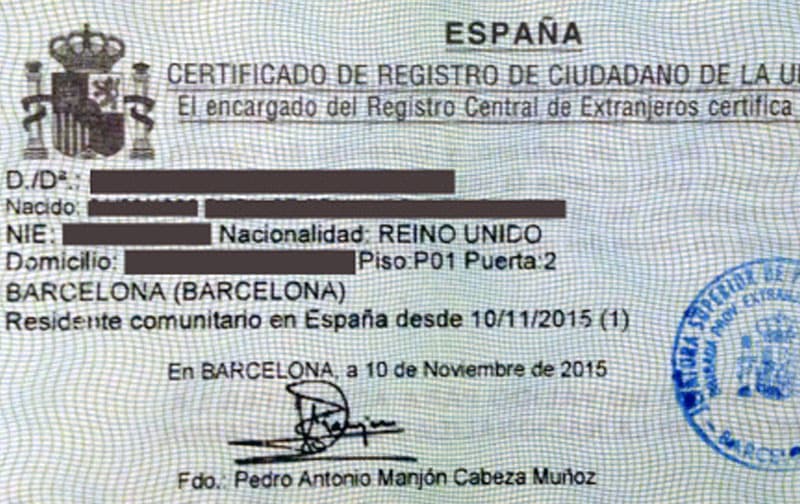
NIE vs TIE After Brexit: What Each Document Actually Does (And Which One You Need)
Since Brexit, British citizens have had to learn an entirely new language of Spanish documents: NIE, TIE, padrón, EX-15, EX-24. The most common confusion starts here: is the NIE the same as the TIE? And do you need both?
This article explains the difference in plain English, based on current Spanish and UK government guidance. The rules around residency and documentation have changed significantly since Britain left the EU, so it is worth checking you are working from up-to-date information rather than old Facebook group posts.
Quick summary: a NIE is an identification number; a TIE is a physical identity card documenting the relevant immigration status. The application sequence depends on your residence route.
The Core Difference
The NIE is a number. Nothing more. It is a tax and identification number for foreigners who have any dealings with Spain — property, banking, tax, car purchases, contracts.
The TIE is a physical card. It is proof of your legal residency status in Spain as a third-country national (which is what British citizens are now, post-Brexit).
You can have an NIE without living in Spain. You cannot have a TIE without first having the right to reside in Spain through an approved visa or residence route.
Do not assume every British applicant needs a consular visa first. Qualifying family, international telework and existing-residence routes can follow different procedures.
What Is the NIE?
NIE means Número de Identificación de Extranjero. It identifies a foreign person for many Spanish administrative and financial dealings. Whether a particular transaction requires it depends on the procedure.
The NIE is a string of numbers and letters. In some regions you receive a printed certificate; in others it exists mainly in digital records. It is not a residency permit. It does not give you the right to live in Spain. It is simply the number that identifies you within the Spanish system.
If you are buying a holiday home in Spain but living in the UK, you still need an NIE to complete the purchase and set up utilities. If you are moving to Spain on a long-term basis, you also need an NIE, but you will need additional documents beyond it.
You can apply for an NIE through the Spanish consulate in the UK before you travel, or at a local police station or Oficina de Extranjería once you are in Spain.
What Is the TIE?
TIE stands for Tarjeta de Identidad de Extranjero. It is the physical identity card issued to non-EU residents in Spain.
British Withdrawal Agreement residents with green certificates are strongly advised to obtain a TIE. Current official guidance also explains the EES implications of travelling with a green certificate. That recommendation is not evidence of a universal pre-2021 exchange deadline.
The TIE contains your photograph, fingerprint and personal details. The validity period depends on your residence route. For example, the initial Non-Lucrative Visa TIE is typically valid for one year.
A card is not a free-standing way to acquire residence rights. Establish the applicable status or authorisation and then follow its documentation process.
The Padrón (Why It Is Different Again)
Many people confuse the NIE and TIE with another document: the padrón. This is a municipal registration certificate issued by your local town hall (ayuntamiento).
Registering on the padrón proves that you live at a specific address in a specific municipality. It is often required before you can access local health services, register children at local schools or apply for certain administrative procedures.
The padrón is municipal. The NIE is national. The TIE is national. They serve completely different purposes and are issued by different offices. You will typically need all three at different stages of your move.
Common Confusions Post-Brexit
Here are the mistakes we see most often:
"I bought a house, so I must be able to live here permanently." No. Property ownership does not confer residency rights in Spain. You can own a property and still only stay for 90 days in any 180-day period without a visa.
"I have an NIE, so I am a Spanish resident." No. The NIE is a number used for tax and transactions. It is not proof of residency.
“I can get residence just by booking a TIE appointment.” No. The card documents an applicable status; the underlying residence procedure must be resolved.
“My green certificate needs no attention.” Check the current TIE guidance, particularly before travel. The TIE is strongly recommended and a green certificate is not accepted for exemption from EES registration.
What You Actually Need — By Situation
Holiday-home purchase: a NIE may be needed for the transaction; ownership does not establish residence.
Non-lucrative residence: follow the consular visa and residence-card process.
International telework: the consular visa and in-Spain residence-authorisation options have different steps.
EU-family: EX-18 registers the EU citizen; EX-19 is for the qualifying non-EU family card.
Spanish-national family residence: check the EX-24 route and subsequent card process.
Ordinary short visit: a NIE or TIE is not normally required just to visit.
Practical Tips
If a transaction requires a NIE, establish whether it will be assigned during your residence application or requires a separate request. Avoid duplicate applications if you already have a number.
Do not confuse NIE application with residency application. They are different processes, different offices and different requirements. Applying for an NIE is relatively straightforward. Applying for residency and a TIE requires a visa or qualifying route first.
Appointment availability varies. Follow the official procedure for your province; there is no reliable universal daily slot-release time.
Keep secure digital copies and bring the originals and copies the office requests. Do not assume every procedure needs three paper copies.
When to Seek Professional Confirmation
If you are unsure which route applies to your situation, or if you have a complex case involving previous visa refusals, a criminal record, Schengen overstay history or uncertain financial documentation, you should speak to a qualified immigration lawyer before proceeding. Getting the route wrong at the start can cost significant time and money to correct later.
Summary
NIE: identification number, not residence permission.
TIE: physical documentation of the relevant immigration status.
Padrón: municipal registration of habitual residence.
Correct sequence: determined by the application route, not by a universal visa-first rule.
Related Articles
Ready for a Clear Plan?
Not sure which route fits your situation? Our Move-to-Spain Readiness Review gives you a personalised written plan — including which documents you need, in what order, and when to speak to a lawyer.
Sources and review date
Reviewed on 8 October 2026. Check the linked official guidance for the requirements that apply to your circumstances.