
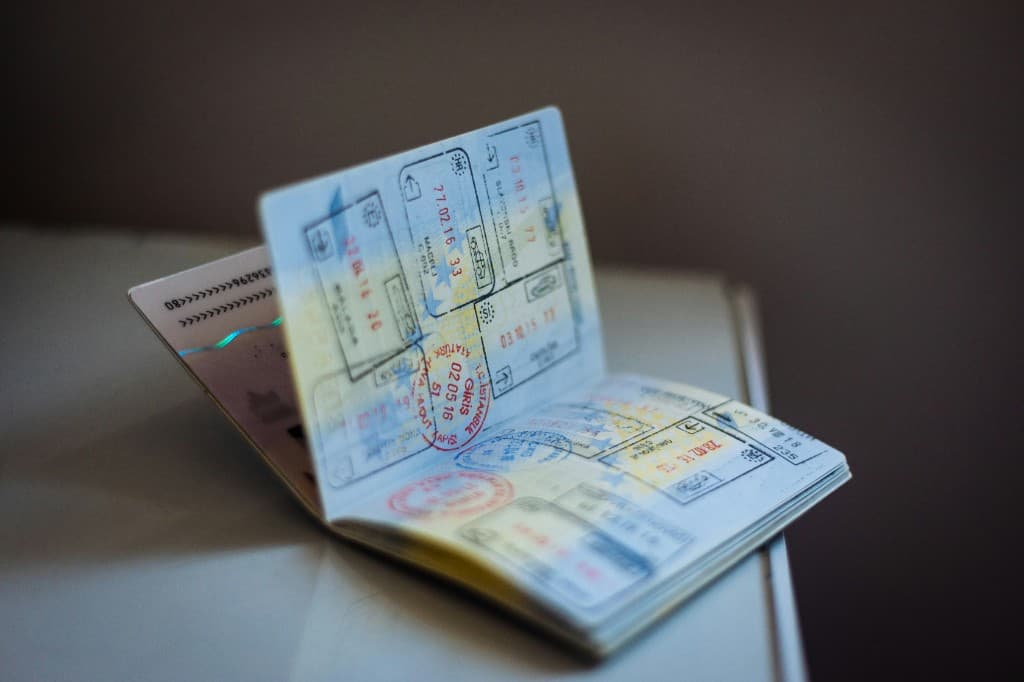
Non-lucrative visa
The main route for British retirees and anyone living off pensions, savings or investments: residence in Spain without working there.
- Income needed
- €2,400 a month
- 400% of IPREM, main applicant
- Each family member
- +€600 a month
- 100% of IPREM
- Work allowed
- None
- Not even for a UK employer
- First permit
- 1 year
- Then renewals of 2 years
- Apply at
- Consulate
- London or Edinburgh, before you travel
Updated 24 Oct 2026 · Figures checked 12 Oct 2026
In short
The non-lucrative visa lets you live in Spain if you can support yourself without working. You show about €28,800 a year of income or savings for yourself and €7,200 a year for each family member, arrange Spanish health cover (private insurance, or an S1 if you're a UK state pensioner), and apply at the Spanish consulate that covers where you live in the UK. You can't work at all on it, including remote work for a UK company.
Is this route for you?
Who it suits
- Retirees living on a UK state, private or workplace pension
- People with savings, rental income or investment income who don't need to work
- Couples and families where one person's income covers everyone
- Anyone who wants the most established and predictable residence route
Who it doesn't suit
- Anyone who wants to work, including remotely for a UK employer or clients: look at the digital nomad visa
- People whose money only just meets the figure, or who can't document where it comes from
- People who will spend more than six months a year outside Spain: to renew you must have lived there more than 183 days a year
- Spouses or partners of Spanish or EU citizens, who usually have an easier family route
What you need
- Enough money to live on without working: at least 400% of IPREM for the main applicant and 100% for each family member (see Money below)
- Health cover: private insurance from an insurer authorised in Spain, covering everything Spain's public system covers. UK state pensioners can use an S1 instead if it's registered with Spanish social security (INSS)
- A clean criminal record for the last five years, from every country you've lived in. From the UK this means an ACRO police certificate (Disclosure Scotland isn't accepted), issued in the last six months
- A medical certificate, issued in the last three months, using the exact wording on the consulate's form (no disease with serious public health implications under the 2005 International Health Regulations)
- A valid passport covering your stay
- You must not be in Spain irregularly, and not on Spain's or the Schengen area's refusal list
Money: income and costs
How much: the figure is tied to IPREM, Spain's public reference income. With IPREM at €600 a month, you need €2,400 a month (€28,800 a year) for the main applicant and €600 a month (€7,200 a year) for each family member. A couple needs €36,000 a year; a couple with one child, €43,200.
What counts: pensions, rental income, dividends and interest count, and so do savings. The consulates accept either a regular income or funds covering the first year (for example a balance of at least €28,800), usually with 12 months of bank statements. Income from work doesn't count if it means you'd be working.
Costs to budget for:
- Visa fee: £516 for British nationals on the consulate's 2025 fee list, plus a €10.94 residence fee (modelo 790 código 052) and the BLS appointment centre's service fee
- Private health insurance: often €80 to €250 a month per person, depending on age and cover
- ACRO police certificate, apostilles and sworn translations into Spanish
- TIE residence card fee once you're in Spain: €16.08 (modelo 790 código 012)
- Renewal fee: €16.40, plus €19.30 for the new TIE
Documents
Check the current list on your consulate's page before you book, because each consulate publishes its own. Expect:
- National visa application form, signed, and a recent passport photo
- Passport, plus copies of every used page
- Proof of income or savings: 12 months of bank statements, pension letters, investment statements
- Private Spanish health insurance policy and certificate, or an S1 with its INSS registration receipt
- Criminal record certificate (ACRO) with apostille and sworn Spanish translation
- Medical certificate with apostille and sworn translation
- Proof of where you'll live, if the consulate asks: a rental contract or property deeds
- Fee 790 código 052 and the consulate visa fee
- Marriage or birth certificates for family members, apostilled and translated
How to apply, step by step
Check your figures and gather documents
Work out your total with IPREM, open a Spanish health insurance policy, and order your ACRO certificate and medical certificate. The police certificate must be under six months old and the medical certificate under three.
Book the consulate appointment
Applications go in person through BLS, the consulates' appointment centre: BLS London for the London consular district, BLS Edinburgh for the Edinburgh one. Check which district covers your address on the consulate's page. You apply from the UK, before you move.
Submit and wait for the decision
The consulate sends the residence part to Spain for approval. Allow up to three months from appointment to decision.
Collect the visa and travel
The visa in your passport covers your first year of residence. Travel to Spain while it's valid.
Register and apply for your TIE
Register on the padrón at your town hall, then book a fingerprint appointment (huellas) at the police station within a month of arriving to get your TIE residence card.
After you arrive, and renewing
- Padrón: register at the town hall as soon as you have an address.
- TIE: apply within one month of arriving; the card shows your NIE.
- Renewal: the first authorisation lasts one year. Apply to renew in the two months before it expires (or up to three months after). Renewals last two years. You show the money again, and you must have lived in Spain more than 183 days in the year.
- Long-term residence: after five years of continuous legal residence you can apply for long-term residence, which no longer depends on the income test. No single absence may be longer than six months, and absences must add up to no more than ten months in the five years.
Tax
Spending more than 183 days a year in Spain normally makes you Spanish tax resident, taxed on your worldwide income. UK government service pensions (civil service, police, armed forces, teachers) usually stay taxed only in the UK under the UK–Spain tax treaty; most other pensions are taxed in Spain. You may also need to declare overseas assets over €50,000 on modelo 720. Get advice from a cross-border tax adviser before you move, not after.
Common mistakes
- Counting on remote work: any work, even for a UK company, breaks the visa's conditions
- A cheap health policy that doesn't cover everything the public system does
- A Disclosure Scotland certificate instead of ACRO
- Documents older than the consulate allows, or missing apostilles and sworn translations
- Moving savings at the last minute without a clear paper trail
- Spending long spells outside Spain and then struggling to renew
When to get professional advice
- Your income is close to the threshold or comes from a mix of sources
- You have a criminal record, a previous refusal or overstayed in Schengen before
- Family members need to follow later or are on different routes
- You have significant UK property, a business or pensions to restructure for tax
Questions people ask
Can I work remotely on a non-lucrative visa?
No. The visa is for people who won't work, and that includes remote work for a UK employer or UK clients. If you want to keep working, look at the digital nomad visa instead.
Can I use savings instead of a pension?
Yes. Consulates accept savings, usually as a bank balance that covers the full year's amount (€28,800 for one person). Keep at least that much in the account from application through to renewal.
Does my UK S1 count as the health insurance?
It can. The Edinburgh consulate accepts an S1 for UK state pensioners if you also bring the receipt showing it's registered with Spanish social security (INSS), and London's checklist has said the same. Getting that registration before you move can be hard, so many people start on private insurance and switch to the S1 once they're resident.
How long does it take?
Allow up to three months from your consulate appointment to a decision, and start gathering documents about two months before that.
Official sources
We check every figure on this page against these pages. Rules and amounts change, so check them again just before you apply.
- Spanish Consulate General in London: non-lucrative residence visa
- Spanish Ministry of Inclusion: initial non-lucrative residence authorisation
- Spanish Consulate General in Edinburgh: non-lucrative residence visa
- Spanish Ministry of Inclusion: renewing non-lucrative residence
- BOE: IPREM at €600 a month (Budget Law 31/2022, still in force)
- BOE: fees for immigration procedures (Order PJC/617/2025)
- GOV.UK: Living in Spain